- LET’S BUILD A HEALTHIER TOMORROW TOGETHER
- +91-8146553280
- jainabhay2012@gmail.com

WHO-GMP Certified Pharma Exporters in India

Top 10 Indian Pharmaceutical Export Companies in 2026
October 10, 2026
Top 10 Contract Manufacturing Pharma Companies in India
October 10, 2026
WHO-GMP Certified Pharma Exporters in India | Arion Healthcare
The global pharmaceutical landscape relies heavily on strong supply chains. Furthermore, it depends on consistent manufacturing protocols and rigorous international standards. Consequently, international buyers, importers, and distributors evaluate potential partners carefully. Finding compliant WHO-GMP certified pharma exporters in India has become essential for commercial success.
Moreover, India drives its dominant global position by delivering affordable, high-quality finished formulations worldwide. However, navigating international procurement requires a thorough understanding of quality compliance. It also demands local regulatory awareness and export verification.
Additionally, evaluating a WHO-GMP certified pharma exporter in India involves analyzing manufacturing compliance. This compliance must align with World Health Organization guidelines. Therefore, procurement teams must examine how companies compile product dossiers.
As a result, this detailed guide examines the mechanics of pharmaceutical export from India. Furthermore, it clarifies the exact meaning of Good Manufacturing Practices. It also details necessary documentation and outlines partner assessment. Consequently, prospective international partners—including companies like Arion Healthcare —can be evaluated effectively.
Understanding WHO-GMP Certified Pharma Exporters in India
To understand core qualifications, you must first clarify the technical scope of certification. Specifically, the World Health Organization (WHO) establishes global parameters for production. It also sets standard operational frameworks for Good Manufacturing Practices (GMP).
As a result, these guidelines ensure that manufacturers consistently produce formulations. They also ensure rigorous testing and control according to strict quality standards.
Regulatory Clarification: The World Health Organization itself does not directly inspect facilities. It also does not grant physical certificates to individual manufacturing sites or trading entities. Instead, national regulatory authorities inspect manufacturing plants against WHO-recommended GMP guidelines. These authorities include the Central Drugs Standard Control Organization (CDSCO) and State Licensing Authorities in India.
Consequently, upon passing inspection, local authorities issue official documentation on behalf of national regulators. This includes a Certificate of Pharmaceutical Product (CoPP) and a WHO-GMP compliance certificate.
Thus, understanding this distinction remains vital for international importers. Therefore, recognize that a distinct difference exists between:
- Manufacturing Site Compliance: The physical facility where workers formulate tablets, capsules, injectables, or syrups meets WHO–GMP requirements as certified by national regulators.
- Exporter Commercial Status: The export company or merchant entity acts as the authorized supply chain partner distributing medicines formulated within certified facilities.
In addition, clarifying these operational frameworks protects international buyers. It prevents misinterpreting administrative documentation. Furthermore, it ensures full compliance with destination country laws.
Importance of WHO-GMP Standards for Pharma Exporters in India
International pharmaceutical trade involves cross-border transportation and varying climate zones. It also involves distinct legislative demands. Therefore, working with WHO-GMP certified pharma exporters in India provides structural assurance. It confirms that manufacturing protocols meet rigorous global benchmarks.
Furthermore, WHO-GMP guidelines mandate structured quality control across every operational phase:
- Contamination Prevention: Facilities prevent cross-contamination during production. They use dedicated HVAC systems, air showers, cleanroom classifications, and controlled pressure differentials.
- Batch Traceability: In addition, comprehensive batch records document every step. This covers raw material sourcing (Active Pharmaceutical Ingredients and excipients) through to final distribution.
- Validated Analytical Methods: Standardized laboratory testing ensures consistent quality. Every dosage unit contains correct therapeutic potency and purity.
- Stability Studies: Moreover, manufacturers validate product shelf-life under multi-zone environmental conditions. This includes Zone IVb testing for hot, humid export regions. Consequently, formulations remain stable through transit and storage.
Thus, partnering with WHO-GMP certified pharma exporter in India helps buyers minimize batch rejections, avoid customs seizures, and deliver safe formulations to patients.
Why India Is a Leading Hub for WHO-GMP Certified Pharma Exporters
India is widely recognized as the “Pharmacy of the World.” For instance, it supplies high-quality generic drugs, vaccines, and complex therapeutic formulations across North America, Europe, Latin America, Africa, Southeast Asia, and the Middle East. Furthermore, multiple strategic advantages drive the country’s export market success.
Key Pillars Supporting Indian Pharmaceutical Exports
- Large Scale Infrastructure: India houses thousands of operational manufacturing units featuring modern automated lines for solid orals, liquid parenterals, dry powder injectables, and topical preparations.
- Skilled Technical Expertise: In addition, a large pool of experienced pharmaceutical scientists, analytical chemists, and quality assurance professionals drive compliance and formulation development.
- Cost Competitiveness: Efficient raw material procurement and optimized production workflows enable WHO-GMP certified pharma exporter in India to offer competitive pricing without lowering safety standards.
- Comprehensive Portfolio Availability: Consequently, Indian manufacturers produce a wide variety of therapeutic classes, ranging from basic antibiotics to complex cardiovascular, anti-diabetic, and oncology formulations.
Key Qualities to Look for in WHO-GMP Certified Pharma Exporters in India
Selecting the right export partner requires looking beyond simple pricing models. Indeed, when auditing potential WHO-GMP certified pharma exporter in India, international procurement teams should assess several operational criteria:
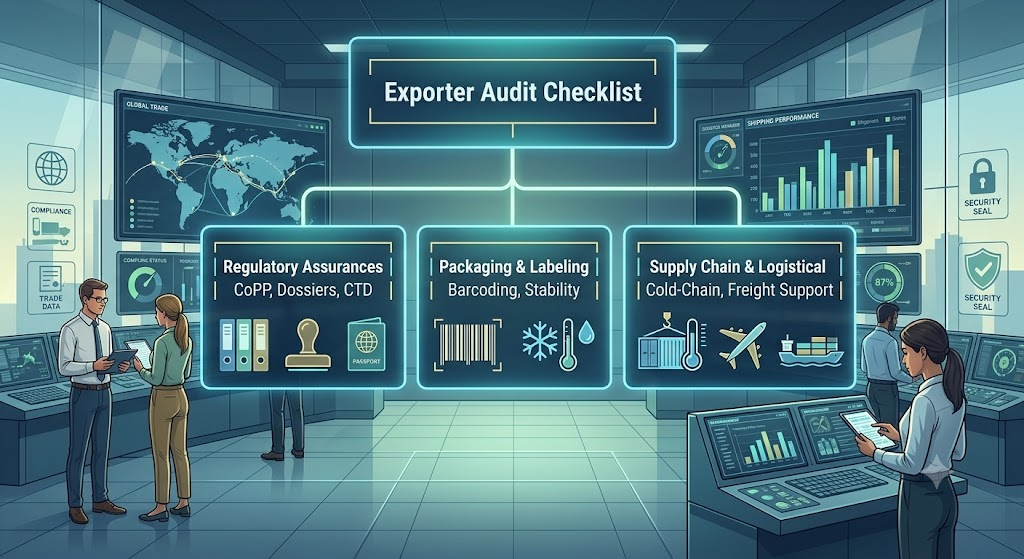
- Documentary Readiness: Top-tier WHO-GMP certified pharma exporter in India maintain ready-to-file regulatory dockets. For example, these include Common Technical Document (CTD) or eCTD formats, Certificates of Analysis (CoA), and stability data.
- Customized Packaging Options: Furthermore, export shipments often require multilingual labeling, security seals, serialized barcoding, and specialized tropicalized blister packaging (such as Alu-Alu) to endure harsh transit environments.
- Cold Chain Logistics Infrastructure: For biopharmaceuticals, insulin, and specialized parenteral formulations, certified exporters use temperature-controlled packing and real-time data loggers to ensure cold-chain integrity.
- Transparent Communication: Additionally, reliable WHO-GMP certified pharma exporter in India maintain open communications regarding manufacturing lead times, regulatory filings, batch tracking, and customs documentation.
Pharmaceutical Products Offered by WHO-GMP Certified Pharma Exporters in India
The product selection offered by WHO-GMP certified pharma exporters in India spans multiple therapeutic categories and dosage forms. Specifically, these formulations serve acute care, chronic disease management, and preventative health programs worldwide.
Primary Product Categories
| Dosage Form | Typical Product Applications | Export Considerations |
| Oral Solid Dosage (Tablets) | Antibiotics, Analgesics, Anti-diabetics, Antihypertensives, Anti-inflammatories | Moisture-resistant blister packing, enteric coatings, sustained-release profiles. |
| Oral Capsules | Hard gelatin and softgel capsules containing antibiotics, multi-vitamins, or gastro-protectives | Controlled storage humidity, shell stability testing for tropical export destinations. |
| Oral Liquids & Syrups | Pediatric suspensions, cough formulas, antacid suspensions, liquid vitamins | Tamper-evident seals, measuring cups, shatter-resistant PET or amber glass bottles. |
| Parenterals / Injectables | Critical care antibiotics, liquid vials, ampoules, dry powder injectables | High-level aseptic fill processes, bacterial endotoxin testing, strict sterility assurance. |
| Topical Formulations | Dermatological creams, ointments, gels, transdermal applications | Uniform active dispersion, collapsible tube integrity, skin compatibility testing. |
Consequently, by utilizing WHO-GMP certified pharma exporter in India, international buyers can consolidate procurement across multiple categories through a single compliant export supply chain.
Quality Control Standards of WHO-GMP Certified Pharma Exporters in India
A defining characteristic of established WHO-GMP certified pharma exporters in India is dedication to total quality management (TQM).
Furthermore, quality assurance goes far beyond basic end-product testing—it spans the full product lifecycle.
Core Testing & QA Protocols
- Raw Material Qualification: First, technicians sample and test Active Pharmaceutical Ingredients (APIs) and inactive excipients for identity, purity, heavy metals, and microbiological quality prior to production releases.
- In-Process Quality Checks (IPQC): Next, during compaction, filling, or liquid mixing, technicians continually evaluate tablet hardness, friability, disintegration times, weight variations, and fill volumes.
- Analytical Laboratory Testing: Furthermore, final products undergo testing using High-Performance Liquid Chromatography (HPLC), Gas Chromatography (GC), and UV-Vis Spectrophotometry to verify precise chemical composition.
- Sterility and Endotoxin Testing: Finally, liquid injectables undergo rigorous sterility testing and Limulus Amebocyte Lysate (LAL) assays to confirm they are pyrogen-free.
Thus, working with WHO-GMP certified pharma exporter in India ensures that every batch shipped to an overseas market is backed by complete Certificates of Analysis (CoA).
Regulatory Compliance and Export Documentation for WHO-GMP Certified Pharma Exporters in India
Exporting pharmaceuticals requires navigating complex international trade laws. Therefore, leading WHO-GMP certified pharma exporters in India support overseas partners by preparing accurate, complete dossier files and shipping paperwork required by health authorities in destination countries.
Essential Export Documents
- Certificate of Pharmaceutical Product (CoPP): National regulators issue this document under WHO guidelines. Consequently, it confirms that the medicine is licensed and authorized for sale in the exporting country.
- Free Sale Certificate (FSC): In addition, this certificate confirms that the product can be legally distributed without restrictions.
- Common Technical Document (CTD / ACTD): Standardized technical dossiers detail drug quality, safety, manufacturing processes, and stability data needed for country-specific drug registration.
- Certificate of Analysis (CoA): Meanwhile, batch-specific analytical laboratory reports detail chemical, physical, and microbiological test results.
- Commercial Shipping Documents: Finally, these include Bills of Lading/Airway Bills, Commercial Invoices, Packing Lists, Certificates of Origin, and specialized Customs declarations.
As a result, navigating these requirements is significantly easier when working alongside experienced WHO-GMP certified pharma exporters in India who understand regional import guidelines.
How to Choose WHO-GMP Certified Pharma Exporters in India
Selecting an export partner directly impacts your market presence, legal compliance, and customer satisfaction. Therefore, when reviewing WHO-GMP certified pharma exporters in India, international buyers should follow a structured evaluation workflow:
Key Questions to Ask Prospective Partners
- Does the underlying manufacturing facility hold active WHO-GMP compliance certification issued by Indian regulatory authorities?
- Can the exporter provide full CTD or ACTD dossiers to support product registration with local health authorities?
- What stability zone testing data is available for the products you intend to purchase?
- What are the minimum order quantities (MOQs) and standard production lead times?
- How are temperature-sensitive or fragile shipments handled during transit?
Consequently, evaluating prospective partners against these questions ensures you select experienced WHO-GMP certified pharma exporters in India equipped to support your growth goals.
Benefits of Partnering with WHO-GMP Certified Pharma Exporters in India
Establishing strong commercial ties with WHO-GMP certified pharma exporters in India offers clear strategic advantages for healthcare businesses, generic distributors, and institutional importers.
- Optimized Sourcing Costs: Indian exporters deliver high-value formulations at competitive costs. Consequently, this helps international distributors maximize margins while offering affordable pricing to end users.
- Flexible Manufacturing Scale: In addition, facilities can handle both small custom formulation batches and high-volume commercial production runs.
- Supply Chain Resilience: Multi-line production centers reduce the risk of supply disruptions for essential medicines.
- Speed to Market: Furthermore, experienced WHO-GMP certified pharma exporters in India use standardized registration processes to help fast-track product launches in target international markets.
Evaluating Arion Healthcare Among WHO-GMP Certified Pharma Exporters in India
When searching for reputable export supply chain partners, global companies often review established Indian pharmaceutical manufacturers. For instance, Arion Healthcare serves as a representative example of a company structured to handle domestic and international requirements.
Practical Evaluation Framework for Arion Healthcare
International procurement teams evaluating Arion Healthcare alongside other WHO-GMP certified pharma exporters in India should focus on verifiable operational metrics:
- Manufacturing Infrastructure: Arion Healthcare operates a pharmaceutical manufacturing unit in Baddi, Himachal Pradesh, designed around WHO-GMP guidelines for oral solids, liquids, and topical formulations.
- Formulation Portfolio: Moreover, the company manufactures an extensive range of dosage forms covering antibiotics, analgesics, anti-inflammatories, gastrointestinal products, and pediatric formulations.
- Quality Assurance Systems: In addition, Arion Healthcare uses structured testing protocols and analytical laboratories to verify batch-to-batch consistency and raw material safety.
- Export Documentation Services: Furthermore, importers can evaluate Arion Healthcare based on their ability to provide technical documentation, batch Certificates of Analysis, and customized packaging needed for regional market entry.
Audit Recommendation: Therefore, prospective business partners should evaluate Arion Healthcare by reviewing current product lists, auditing facility certifications, requesting batch samples, and assessing their regulatory dossier support relative to target country requirements.
Thus, by using this objective evaluation process, international buyers can assess WHO-GMP certified pharma exporters in India like Arion Healthcare to build compliant commercial partnerships.
Challenges and Opportunities for WHO-GMP Certified Pharma Exporters in India
The global pharmaceutical export sector presents both evolving challenges and significant commercial opportunities for WHO-GMP certified pharma exporters in India and their international buyers.
Key Market Dynamics
- Evolving Quality Frameworks: Health authorities across developing markets continually tighten registration rules and require higher stability standards. Therefore, exporters that proactively adapt to these changing policies secure a strong competitive edge.
- Rising Demand for Generics: Furthermore, worldwide pressure to reduce national healthcare budgets accelerates the adoption of high-quality, cost-effective generic formulations produced in India.
- Supply Chain Transparency: Meanwhile, importers increasingly demand real-time shipment visibility and clear batch tracking. Consequently, leading WHO-GMP certified pharma exporters in India adopt digital tools to streamline logistics and regulatory updates.
Frequently Asked Questions (FAQs)
1. Does the World Health Organization (WHO) directly inspect and certify Indian pharma exporters?
No. The WHO establishes global manufacturing guidelines, but it does not directly audit facilities or issue certificates to individual companies.
Instead, local national regulatory authorities—such as state drug controllers or the CDSCO in India—inspect production plants and issue WHO-GMP compliance certificates and CoPP documents based on those guidelines.
2. What is the difference between a WHO-GMP compliant manufacturer and a merchant pharma exporter?
A WHO-GMP compliant manufacturer owns or operates the physical facility where workers produce formulations under certified standards.
Conversely, a merchant exporter sources products from certified plants to handle international marketing, logistics, and documentation. Thus, both models play valuable roles in global pharmaceutical trade.
3. What documents are required to import pharmaceutical products from India?
Standard import documentation typically includes a Certificate of Pharmaceutical Product (CoPP), Certificate of Analysis (CoA), Free Sale Certificate (FSC), CTD/ACTD registration dossiers, Commercial Invoice, Packing List, Bill of Lading or Airway Bill, and a valid import license issued by the destination country’s health authority.
4. How long does it take to register and import a product from a WHO-GMP certified Indian exporter?
Timeline length depends on destination country health regulations. Typically, product registration dossier approvals take anywhere from 3 to 12 months.
Once registered, standard manufacturing and export dispatch lead times generally range between 30 and 60 days.
5. Can Indian pharmaceutical exporters provide customized packaging and branding?
Yes. Experienced WHO-GMP certified pharma exporters in India offer contract manufacturing and private-label packaging.
For example, this includes customized blister foils, specialized box art, multilingual labeling, and localized package inserts to meet target market regulations.
Conclusion
Finding and partnering with verified WHO-GMP certified pharma exporters in India remains a critical step for healthcare businesses, distributors, and importers looking to secure stable, high-quality generic drug supplies. Indeed, India’s advanced manufacturing infrastructure, skilled technical workforce, and strict adherence to global production standards make it an ideal hub for global pharmaceutical procurement.
Furthermore, by focusing on verified regulatory credentials, auditing manufacturing plants, evaluating product stability data, and reviewing export documentation capabilities, international buyers build profitable, long-term commercial relationships. For instance, companies like Arion Healthcare provide an excellent example of how international teams can evaluate Indian pharmaceutical partners using objective performance indicators. Thus, sourcing through compliant WHO-GMP certified pharma exporters in India helps international healthcare organizations deliver safe, effective, and affordable treatments to patients worldwide.
